In the first of a series of wine columns, Travis Mooney-Evans looks at how English wine has evolved, and at one of its greatest exponents, Gusbourne Estate
When is the last time you looked for an English wine on a wine list? Perhaps a sparkling wine from East Sussex or a crisp white from Devon? Or even a mature red from Essex? Well, if you don’t already know, let me tell you: there’s some excellent wine made in England today.
It shouldn’t be surprising: wine played an important part in Britain from the earliest times. Imported at least as early as the Iron Age, vines and viticulture were introduced by the Romans, the Normans brought extensive experience with them across the channel, and 42 English vineyards appear in the Domesday Book. Then, from around the 12th century until the 1950s, commercial wine-making all but disappeared in Britain. It might have been worsening weather, but it definitely had something to do with the English crown gaining control of Bordeaux and importing Claret by the shipload as a result. The British, ever keen on wine – red, white, dry, sweet, fortified, sparkling – became world experts in the buying, aging, selling, and serving of the finest vintages, but not so much in the growing and production of them.
The first commercial vineyard in modern England was planted in 1952, and they slowly spread. Early-ripening grapes for sparkling wines or dry whites and the occasional light red dominated production. Many were good, but not many were great. And if you’re used to buying Chardonnay, Merlot, Sauvignon Blanc, or other common US varietals — Seyval Blanc, Schönburger, Rondo – well, it’s easier sometimes to go with what you know.
But about 20 years ago, a combination of rising temperatures, better site selection, and improved methodology made it possible to grow Chardonnay, Pinot Noir, and Pinot Meunier in British vineyards, and many were planted, especially for sparkling wine production. There are decent examples of Albariño and even a small and reliable planting of Riesling. Across Britain there are now more than 280 wineries and more than 660 vineyards. Winemakers are constantly pushing boundaries and delivering some truly excellent wines as a result.
Leading that charge are a number of producers making excellent sparkling wine. Some make great still wine. And one of my favorites consistently does both.
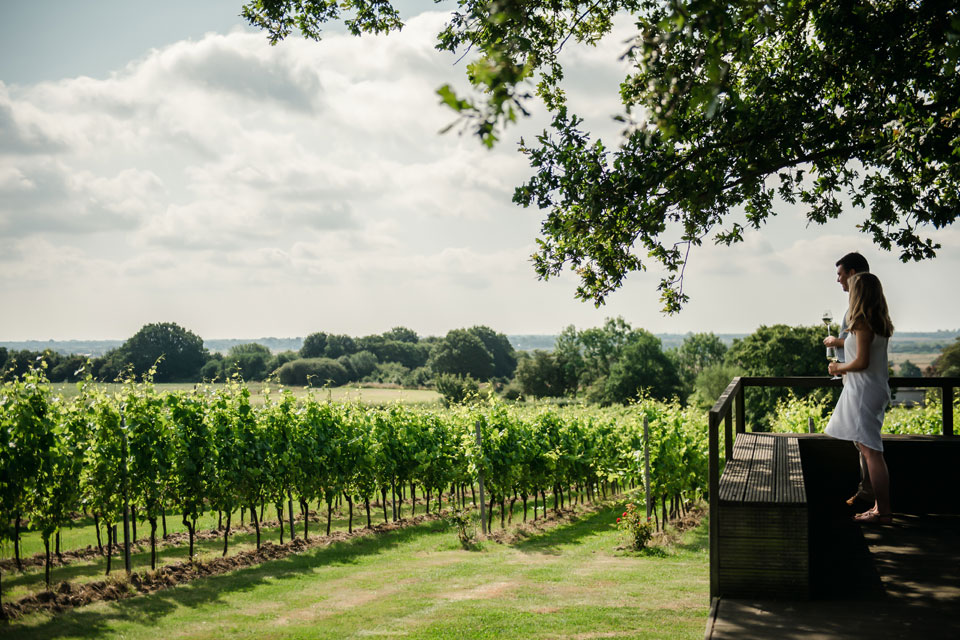
Andrew Weeber planted the first vines on Gusbourne Wine Estate in 2004. The estate, tucked into a corner of Kent near the village of Appledore, is dedicated to estate-grown vintage sparkling wine – with a small range of still wines as well. Gusbourne has 93 hectares under vine across Kent and Sussex, where they grow the core trio of Champagne grapes: Chardonnay, Pinot Noir, and Pinot Meunier. Traditionally produced, they offer a core range of four sparkling wines, along with three still wines, and a number of special or limited releases.
Gusbourne traces their name back to 1410, when John de Goosebourne owned the estate. Over the centuries, the spelling (and pronunciation) of the estate name mutated to “Gusbourne”. The de Goosebourne coat of arms, which shows three geese on a black shield, still hangs in the village church.

Gusbourne’s Head Winemaker, Mary Bridges, trained at Plumpton College in East Sussex – the home of British winemaking. She followed that with practical experience in France and California before settling into a job at Gusbourne. She came up through the ranks, spending time as Cellar Hand, Assistant Winemaker, Oenologist, and now, Head Winemaker.
“At Gusbourne, our commitment to producing only vintage wines from our own estate is one of our greatest strengths,” said Bridges. “Each year in England is unique, and instead of blending those differences away, we celebrate them. It means our wines carry the character of a single season and the place they come from – you can taste the year in the glass. It’s one of the things that makes Gusbourne so special: every bottle is a true reflection of our craftsmanship, who we are, and the land we care for.”
The Nest, their tasting room and cellar door, is just an hour from London by high-speed train. Set in their estate vineyard grounds, it’s a bucolic break from the bustle of the city. Open year-round, people can opt for impromptu self-guided tours and wine-tasting flights, as I did, or book into a range of ticketed events, such as expert-led masterclasses, tutored tastings, and dining experiences.
“When we opened The Nest, it wasn’t just about creating a place to taste our wines – it was about welcoming people into the heart of English winemaking,” said Dan Grainger, the Nest’s General Manager. “The fact that visitors seek out Gusbourne and English wine more broadly as a destination shows how far our industry has come. And when you visit us here, in our special corner of Kent, that’s when you truly understand who we are and how we’re able to craft such distinctive wines in the heart of the English countryside. It’s a sign of maturity – we’re no longer simply making world-class wines; we’re creating experiences that connect people to the vineyards, the landscape, and the spirit of English wine today.” Others agree – in addition to awards for their wines, they are also the only English winery in the top 50 of the World’s Best Vineyards 2025.
As nice as the Nest is – and it is very nice – the real star is Gusbourne’s consistently excellent wine. These wines are all part of the core Gusbourne range:
Wine Name: Brut Reserve
Vintage: 2021
Wine Category: Sparkling
Grape blend: 71% Chardonnay, 18% Pinot Noir, 11% Pinot Meunier
Region: England
State or country: Kent and West Sussex
Alcohol: 12%
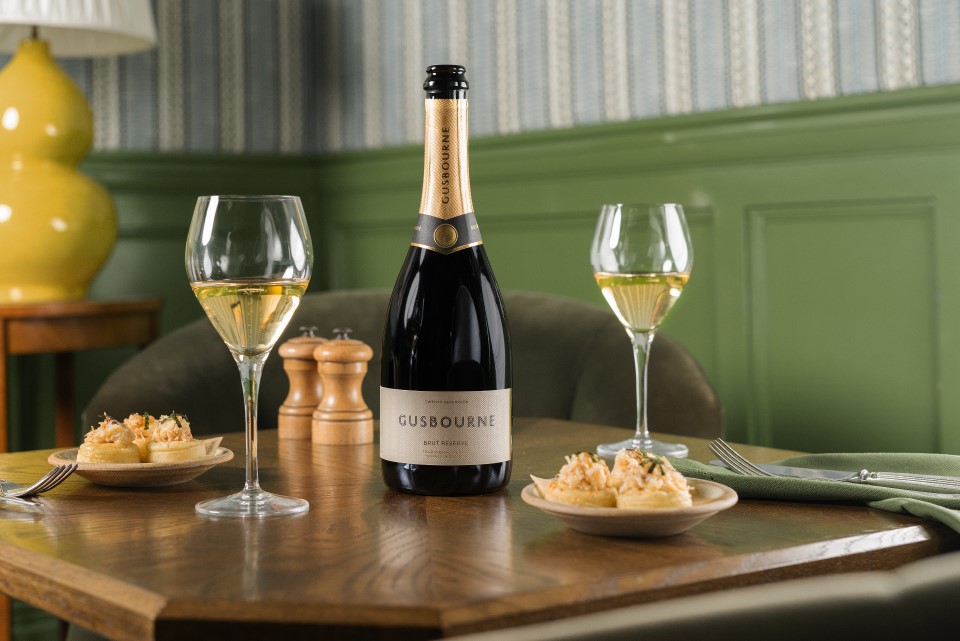
Gusbourne’s Brut Reserve is their best-selling wine, and there’s a reason why. It’s refined and complex yet approachable, lending itself to many food pairings, including the stereotypical Champagne and hot dogs. Golden in color, with the same fine bubbles that go across all Gusbourne’s sparkling wines. Lemon, biscuit, cherry, and strawberry on the nose, with biscuit running to brioche and the addition of stone fruit and a creamy texture. Recommended.
Wine Name: Blanc de Blanc
Vintage: 2019
Wine Category: Sparkling
Grape blend: 100% Chardonnay
Region: England
State or country: Kent and West Sussex
Alcohol: 12%
Gusbourne Blanc de Blanc is a statement: English Sparkling can play with the big boys, so watch out. Pale straw color, with the Gusbourne trademark vibrancy. Toast, cream, green apple, and yeast on the nose. Dry, with green apple, hints of honey, citrus fruit, and pear. Excellent as an aperitif. Recommended.
Wine Name: Blanc de Noir
Vintage: 2020
Wine Category: Sparkling
Grape blend: 100% Pinot Noir
Region: England
State or country: Kent and West Sussex
Alcohol: 12%
A wine of great depth, the Gusbourne Blanc de Noir delivers complexity and balance. Medium yellow to gold in the glass. Nose of red apple, pear, brioche. Red and green apple, toasty tones, almost apple pie on the palate. Highly recommended.
Wine Name: Chardonnay Guinevere
Vintage: 2023
Wine Category: Chardonnay
Grape blend: 100% Chardonnay
Region: England
State or country: Kent
Alcohol: 12.5%
Chardonnay Guinevere is the reason I came to know Gusbourne. It’s an absolutely elegant Chardonnay that somehow takes the best from California and Chablis, perhaps via Bordeaux. Golden in the glass. Butter, lemon, and honey on the nose. Vanilla, apple, and creamy, with minerality that reinforces balance and delivers complexity and an amazing finish. Guinevere 2023 is a triumph. Highly recommended.
Wine Name: Pinot Noir
Vintage: 2022
Wine Category: Pinot Noir
Grape blend: 100% Pinot Noir
Region: England
State or country: Kent
Alcohol: 13%
Gusbourne only makes a Pinot Noir in years when the conditions are right; still, red wines need a good growing season to develop the ripeness levels necessary to round them out. If this wine is any indication, 2022 was a very good year for growing grapes. Garnet in color. Cherries, spices, and red berries on the nose. Medium body with underlying minerality and a slightly sweet finish. More body than some previous vintages, which delivers length and excellent mouthfeel. Recommended.
Gusbourne wines can be purchased direct from the Estate at
www.gusbourne.com.
Originally Published in The American Magazine, Issue 806. Transcribed for web presentation. Copyright 2025 Travis Mooney, all rights reserved.